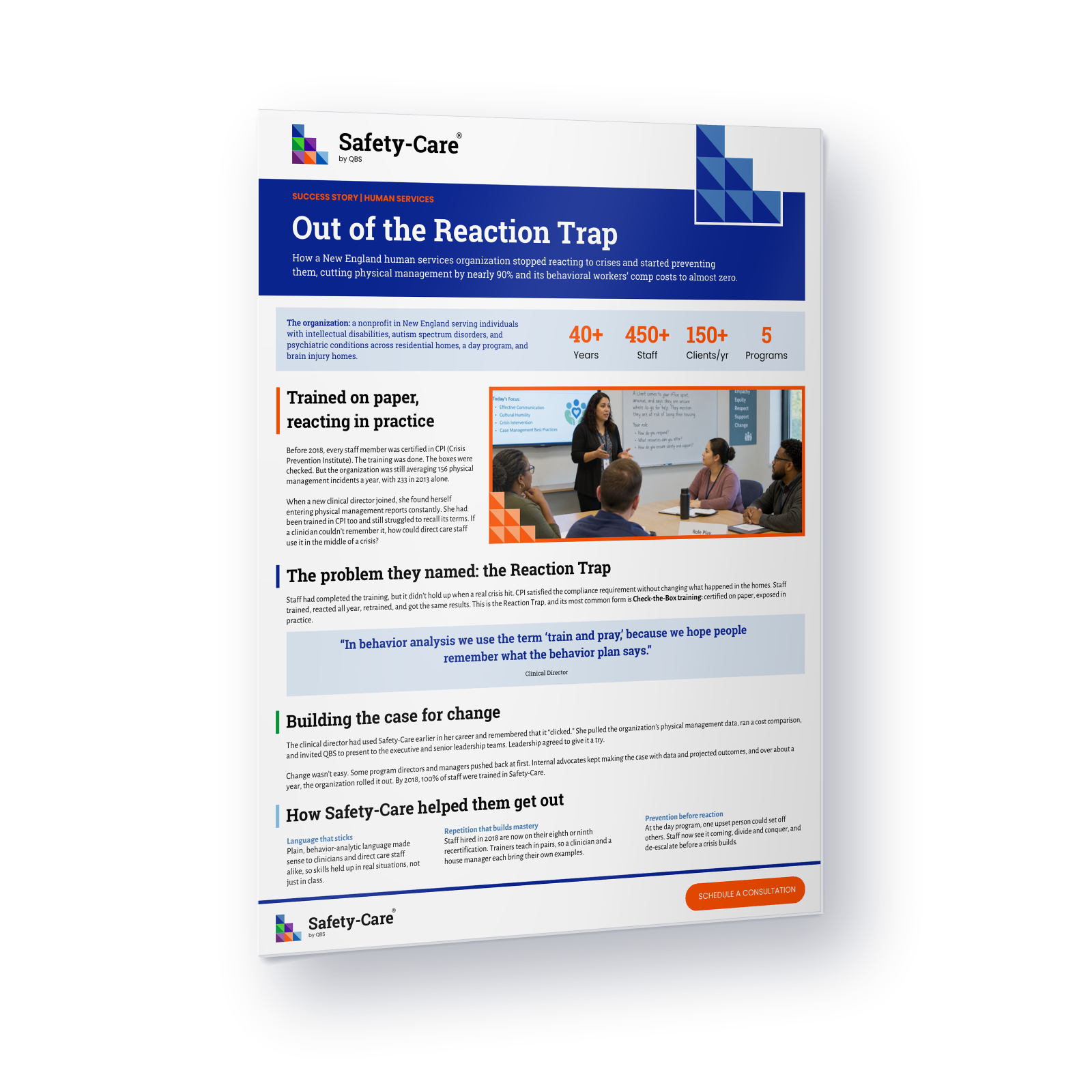
Most crisis training teaches staff to respond better. It was never built to ask why the crises keep happening. That gap is the Reaction Trap.
Staff are certified each fall, and the box is checked.
Escalations keep coming, and staff get better at managing them.
Next year looks a lot like this one. Nobody chose this loop.
Nobody chose this. Most crisis training answers what to do when someone escalates. It was never built to ask why it keeps happening.
The Reaction Trap: reacting to crises instead of preventing them.
The trap: Check-the-Box Training
Certified on paper, exposed in practice. A certificate shows who attended. It does not show whether staff can use those skills at 10 a.m. on a Tuesday, under stress, with a student they care about.
The answer
The Proven Approach, all five steps
Prevention is the foundation, grounded in applied behavior analysis and aligned with the MTSS and PBIS frameworks districts already run. Five steps close the loop, so every year builds on the last.
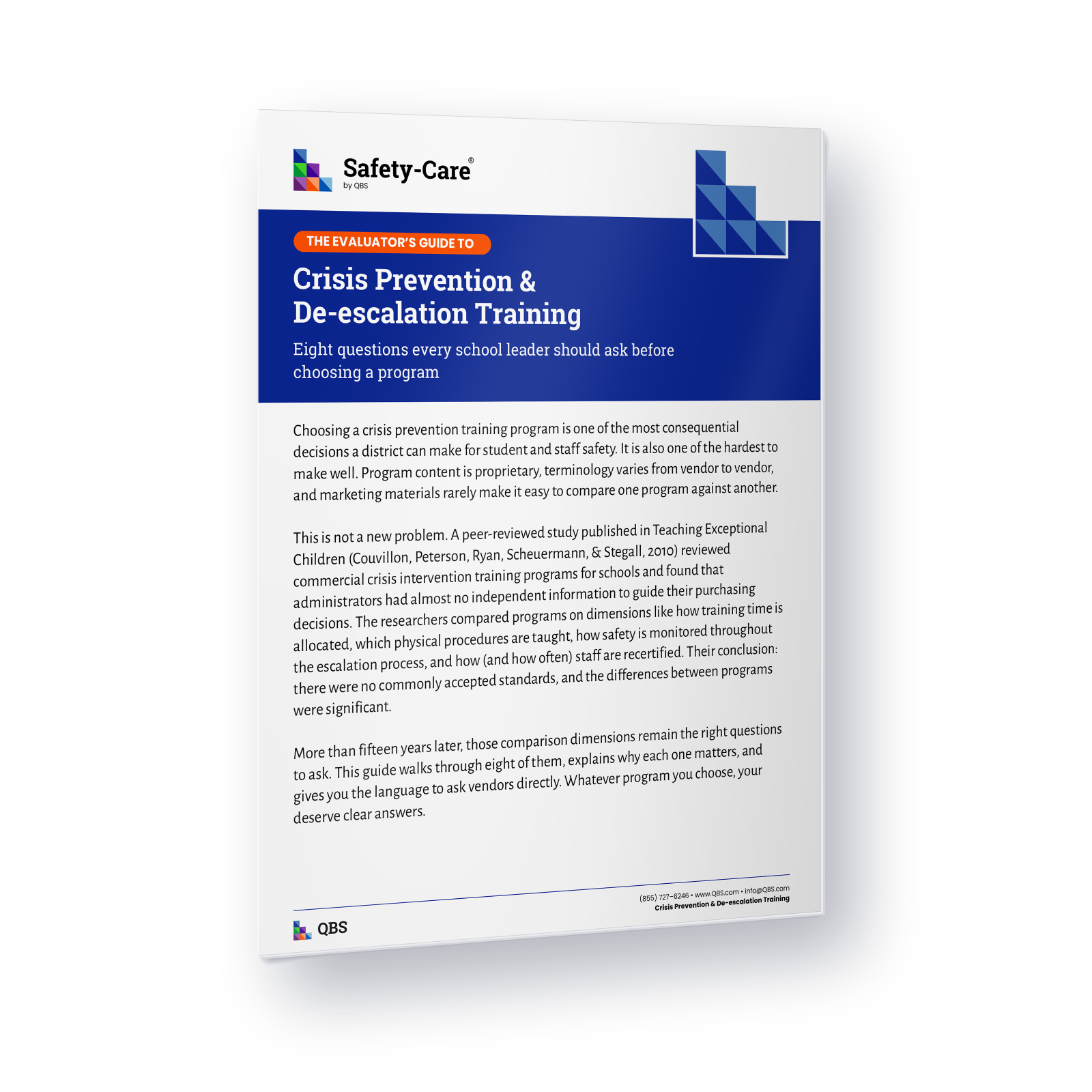
The useful question is whether prevention is built into how a program works. We encourage every director to ask these of any provider, including us.
Is it one module among many, or the foundation everything else is built on?
And who makes sure it is implemented with fidelity after training day?
A prevention claim without that structure behind it is a slogan.
Safety-Care was designed by behavior analysts to answer the question that prevents the next incident. The Proven Approach turns that into a loop that builds year over year.
Look at behavior patterns, incident trends, staff experience, and key stakeholders.
We can help you start here.
Decide what you're working toward and how you'll measure it.
We have tools and people to help.
Train the right people at the right level for your population.
We provide the training and materials.
Put it into practice. Reinforce the skills and routines that sustain the program.
We stay connected with resources and clinical experts.
Measure what changed and connect results back to the goals you set in Step 2.
We help you communicate progress to the people who need to see it.
In the Reaction Trap, every year starts over. With the Proven Approach, every year builds on the last.
The trap · Check-the-Box Training
Training records show who sat through the course. Your board wants to know what changed for students and staff.
The answer · Step 5, Show the Impact
Set the goal, pick the measure, and report what changed for students and staff.
For directors and leaders
Short sessions on the questions leaders face around crisis prevention, from choosing a program to answering your board after an incident.
For trainers and staff
Monthly how-to sessions that put Safety-Care skills into practice, with time for your questions.
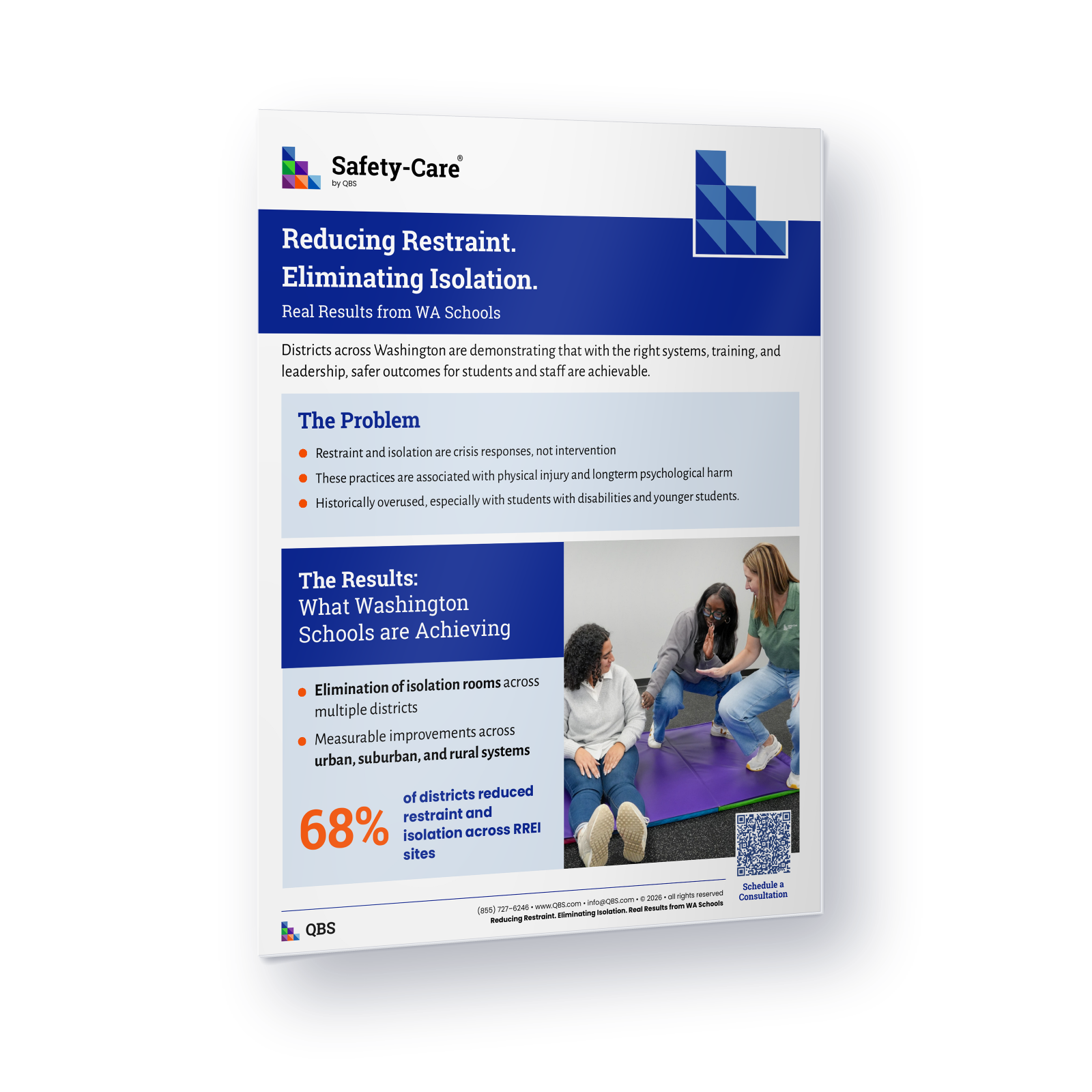
Documented reductions in restraint, seclusion, and staff injury across real-world settings.
Reduction in hours spent in seclusion
Reduction in hours spent in restraint
Reduction in staff-related injuries
Results from participating organizations, methodology available on request. Results vary by setting and implementation.
“A very positive experience with the Safety-Care program. QBS trained all of our Special Education staff, replacing a previous program that didn't fully meet our needs. Thanks for developing such a great safety training course!”
Jennifer Donlon
Bonny Eagle School District
“Our facility houses over 200 adults with intellectual and other disabilities. In 2008, we transitioned our entire staff to Safety-Care. Embracing it has been a key factor in improving safety and quality of care.”
David D. Lanier, Ph.D.
Bluegrass Oakwood
“We just completed our first Safety-Care training, but now I'm even more confident after leading it myself.”
Training Coordinator
Safety-Care Partner
“Beyond aligning with our ABA model, Safety-Care is the first truly evidence-based crisis prevention system I've seen.”
Dr. Terry Page
Advoserv Inc.
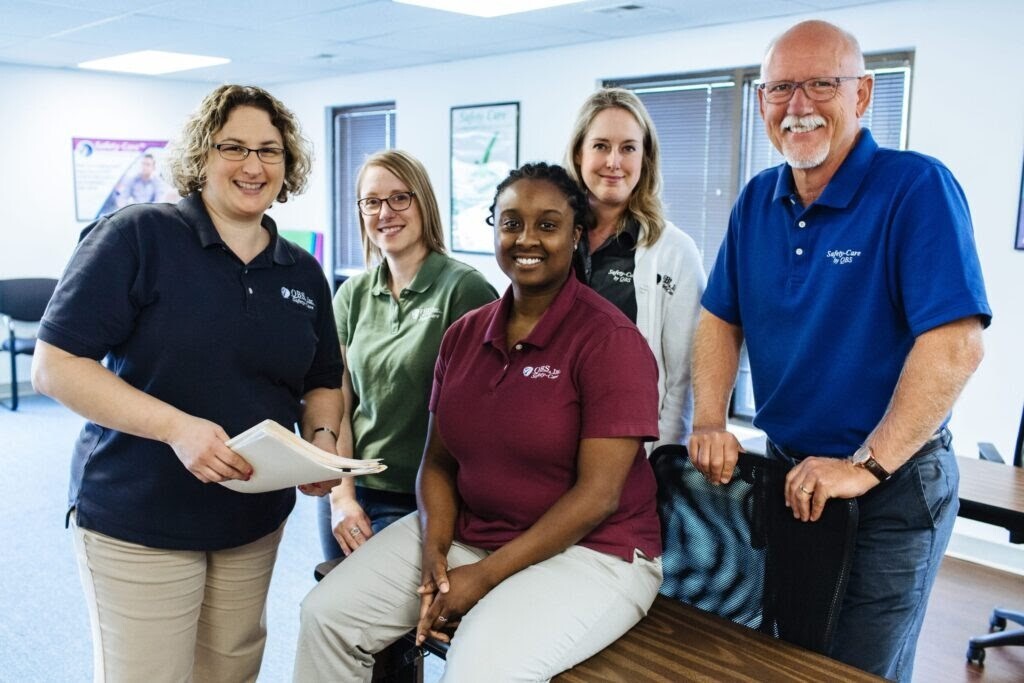
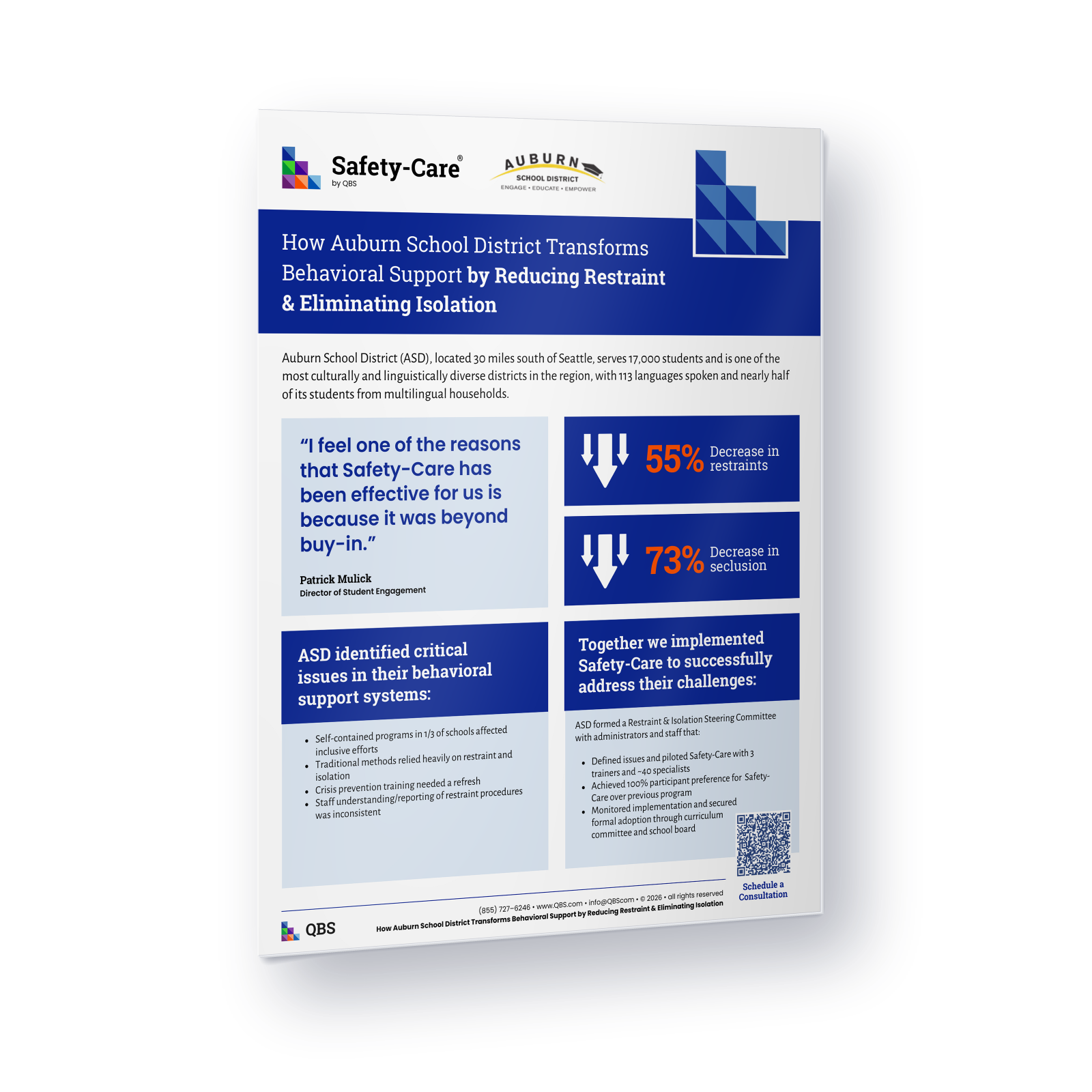
I feel one of the reasons that Safety-Care has been effective for us is because it was beyond buy-in.
Patrick Mulick
Director of Student Engagement, Auburn School DistrictYou don’t have to solve behavioral safety alone.
Safety-Care® provides evidence-based, prevention-first training that helps teams reduce escalation, minimize reliance on restrictive interventions, and improve safety for everyone involved.
Use this consultation to talk through your setting, your challenges, what effective, least-restrictive prevention can look like for your organization, along with practical next steps tailored to your environment.
Not the final decision-maker? That's okay.
This can be a brief introduction to explore fit. We’ll help guide next steps.
You can schedule a call at a convenient time or request an immediate callback.