
Prevention-First. Practical. Clinical. Proven.

Safety-Care® By QBS

Evidence-based training that helps teams reduce crises, decrease restraints & injuries, and protect dignity across classrooms, clinics, community settings, and beyond.

Designed To Manage Behavioral Challenges

Including but not limited to:

Designed to Manage Behavioral Challenges
check-icon

Physical aggression

check-icon

Verbal aggression

check-icon

Hyperactivity

check-icon

Uncooperativeness

check-icon

Tantrums

check-icon

Elopement

check-icon

Use of weapons

check-icon

Intimidation

check-icon

Property destruction

check-icon

Bullying

check-icon

Self-injury

check-icon

Fighting

What Makes Safety-Care Different?

Finally, Training That Works the Way You Need It To

Prevention Focused

Reinforcement‑based supports that reduce the frequency and severity of behavioral crises, grounded in evidence‑based behavioral science.

Practical

Scenario‑based, skills‑driven learning staff can apply immediately in their work environment.

Clinical

Developed by Board Certified Behavior Analysts (BCBAs) using errorless teaching (structured practice that minimizes mistakes while learning) and fluency‑based mastery.

Proven

Consistent reductions in restraint, seclusion, and injury across diverse settings. Trusted by thousands of organizations nationwide.

Customize Your Safety-Care Program With
Additional Skills Modules

Customize Your Safety-Care Program with Additional Skills Modules
  • For more severe behavioral challenges, we offer the Advanced Skills Module. This module provides an expanded toolbox of skills and strategies for those certified in the Safety-Care core curriculum. These include additional physical safety skills, team intervention, strategies for preventing and managing peer aggression, vehicle incidents, object management, transitions, and safe floor holds.

Safety-Care® Is The Preferred Program

See how Safety-Care stacks up against other crisis prevention training programs

Training
Other Crisis Prevention Training
Outcomes
Limited emphasis on measurable outcomes
Approach
Crisis response and restraint-focused
Training Cost
Over 2X the cost of Safety-Care® Trainer training
Recertification Cost
Over 2X the cost of Safety-Care® recertification
Initial Training
4 days
Membership Fee
Annual membership fee
Course Instruction
Trainers are not BCBAs

Safety-Care's Proven Approach To Lasting Change

Five Steps to behavioral change across your organization

  1. 1

    See What's Happening

    Look at what's happening: behavior patterns, incident trends, staff experience, and key stakeholders.

    We can help you start here.
  2. 2

    Set Your Goals

    Decide what you're working toward and how you'll measure it.

    We have tools and people to help.
  3. 3

    Equip Your Team

    Train the right people at the right level for your population. Grounded in behavioral science. Focused on prevention.

    We provide the training and materials.
  4. 4

    Change & Sustain

    Put it into practice. Reinforce the skills and routines that sustain the program.

    We stay connected with resources and clinical experts.
  5. 5

    Show the Impact

    Measure what changed and connect results back to the goals you set in Step 2.

    We help you communicate progress to the people who need to see it.

Compliance & Accreditation

Compliance & Accreditation

Designed to help you meet regulatory and accreditation requirements while delivering real‑world results.

QBS provides training and support; your organization interprets and applies requirements locally.

check-icon

State and federal restraint/seclusion regulations (education & healthcare)

check-icon

The Joint Commission (JCAHO) and CMS patient‑rights standards

check-icon

HCBS Settings Rule and state licensing for community programs

check-icon

BACB, BHCOE, and payer expectations for ABA organizations

Funding & Incentives

Thousands of organizations use Safety‑Care to satisfy funding and insurer expectations. We’re aligned with how agencies fund behavioral‑safety and risk‑reduction training across markets. Funding approval remains your responsibility, but we’re happy to discuss how others approach it.

Allowability is local — we’re aligned and ready to discuss the approach.

Funding & Incentives
check-icon

Education: Special‑education budgets (IDEA Part B/CEIS), school‑safety and school‑climate funds, Title II‑A, Title IV‑A.

check-icon

Healthcare: Patient‑safety and risk‑management budgets; insurer or workers‑comp incentives for injury reduction.

check-icon

Human Services / IDD: Medicaid/HCBS training requirements and state provider‑training funds.

check-icon

ABA Organizations: Payer/accreditation expectations and risk‑pool endorsements tied to injury reduction.

How Safety-Care Compares

Organizations evaluating alternatives to CPI (Crisis Prevention Institute) choose Safety‑Care for its prevention‑first and skills‑based approach. Where CPI focuses on theory and restraint, Safety‑Care teaches practical behavioral strategies that work in the real world.

Customers switch to:

  • Replace theory + restraint focus with prevention‑first training staff can use immediately
  • Gain BCBA‑developed, evidence‑driven curriculum and measurable outcomes
  • Improve staff fluency and confidence through error‑less practice
  • Integrate training into PBIS, patient‑safety, and risk‑management frameworks
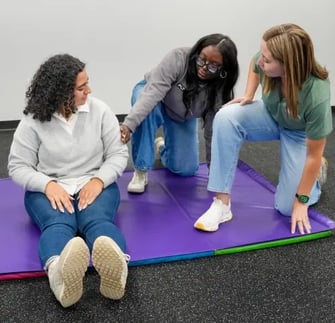
Adults discussing behavior challenges in a group setting

Documented reductions in restraint, seclusion, and staff injury across real-world settings.

275,000+
Staff Certified Annually
3,700+
Active Customer Organizations
12,500+
Active Safety-Care® Trainers
70%

Decrease in hours spent in seclusion

58%

Decrease in hours spent in restraint

57%

Decrease in staff related injuries

Results from participating organizations, methodology available on request. Results vary by setting and implementation.

Trusted By Over 3,700 Organizations
Across North America ... And Growing

You don’t have to solve behavioral safety alone.

Schedule A FREE Consultation

Safety-Care® provides evidence-based, prevention-first training that helps teams reduce escalation, minimize reliance on restrictive interventions, and improve safety for everyone involved.

Use this consultation to talk through your setting, your challenges, what effective, least-restrictive prevention can look like for your organization, along with practical next steps tailored to your environment.

Not the final decision-maker? That's okay.
This can be a brief introduction to explore fit. We’ll help guide next steps.

You can schedule a call at a convenient time or request an immediate callback.