Plan De-Escalation Training for Your Team

Prevention-first behavioral safety training that teaches staff to recognize escalation early, respond calmly, and protect everyone involved.

Safety-Care® helps organizations build practical de-escalation skills grounded in behavioral science and positive-support frameworks. Teams learn how to prevent escalation, preserve dignity, and maintain safety across classrooms, clinics, and community settings.

Speak with a Safety-Care expert about prevention-focused training options for your organization. Not the final decision-maker? That's okay. This can be a brief introduction to explore fit. We’ll help guide next steps.

Schedule a De-Escalation Consultation


Plan the Right De-Escalation Approach

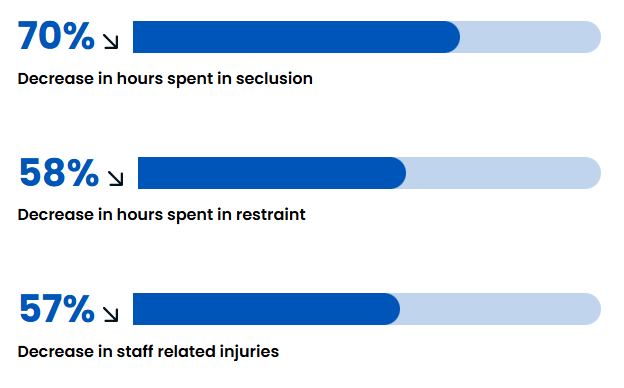
Organizations often explore Safety-Care when they want staff to respond confidently without relying on reactive or restrictive approaches, an approach associated with measurable reductions in seclusion (−70%), restraint (−58%), and staff injuries (−57%).

During this consultation we'll discuss:

The types of behavioral escalation your staff encounter

How teams currently respond to challenging behavior

Opportunities to strengthen prevention and de-escalation practices

Training options that align with your setting and regulations

What Staff Learn in De-Escalation Training

Recognize early warning signs of escalation

Staff learn to identify behavioral and environmental signals that often precede crises.

Use prevention strategies that stabilize situations

Reinforcement-based approaches help reduce escalation and support safe behavior.

Apply calm, structured de-escalation techniques

Teams practice responses that protect relationships while restoring safety.

Respond safely if a crisis occurs

Least-restrictive safety procedures are taught as a last resort to protect everyone involved.

What Happens After You Request a Consultation:

1

A Safety-Care team member reviews your request

2

We contact you to schedule a consultation

3

You discuss your organization’s needs and potential training

Trusted by Over 3,400 Organizations Across the U.S. and Canada

Beyond aligning with our ABA model, Safety-Care is the first truly evidence-based crisis prevention system I’ve seen.

Dr. Terry Page
Advoserv Inc.

Buy-in with Safety-Care is better than it was with previous trainings. The way the materials are laid out helps with fluency and they are thorough and detailed. Helps to get point across to staff.

John Mortensen
Assistant Clinical Director

Our facility houses over 200 adults with intellectual and other disabilities. In 2008, we transitioned our entire staff to Safety-Care. Embracing it has been a key factor in improving safety and quality of care.

David D. Lanier, Ph.D.
Bluegrass Oakwood

The de-escalatation strategies have been extremely helpful for our staff and we have had a notable decrease in the use of physical interventions (restraint or transports) since we began using the Safety-Care curriculum in our district.

Heather Ballou
Stoneham Public Schools

Safety-Care® is the Preferred Program

See how Safety-Care stacks up against other crisis prevention training programs

Training
Safety-Care® Trainer Training
Other Crisis Prevention Training
Outcomes

✅ Designed to reduce incidents, injuries, and restraint use

Limited emphasis on measurable outcomes

Approach

✅ Prevention-first, behavior-analytic approach

Crisis response and restraint-focused

Training Cost

✅ $2,599 for Trainer training

Over 2X the cost of Safety-Care® Trainer training

Recertification Cost

✅ $899 for recertification

Over 2X the cost of Safety-Care® recertification

Initial Training

✅ 3 days

4 days

Membership Fee

✅ No membership fee

Annual membership fee

Course Instruction

✅ Master Trainers are Board Certified Behavior Analysts (BCBAs)

Trainers are not BCBAs

What Makes Safety‑Care Different

Prevention Focused

Reinforcement‑based supports that reduce the frequency and severity of behavioral crises, grounded in evidence‑based behavioral science.

Practical

Scenario‑based, skills‑driven learning staff can apply immediately in their work environment.

Clinical

Developed by Board Certified Behavior Analysts (BCBAs) using errorless teaching (structured practice that minimizes mistakes while learning) and fluency‑based mastery.

Proven

Consistent reductions in restraint, seclusion, and injury across diverse settings. Trusted by thousands of organizations nationwide.